Business casual is not “no tie.” It is not “whatever isn’t jeans.” For men, it usually means a tailored blazer, a collared shirt, dress pants or clean chinos, and leather shoes, worn without the full uniformity of a matching suit. The exact line shifts by office and industry, but the core idea holds: structure without stiffness.
That is where custom clothing changes the outfit entirely. A traditional suit will always have its place, but business casual gives you more room to build a wardrobe around personal style, comfort, and versatility. At The Tailored Foundation, custom clothing includes suits, shirts, shoes, blazers, pants, tuxedos, and fitting consultations, so building that wardrobe does not mean settling for one standard look.
What Business Casual Actually Means
Business casual sits between formal suiting and everyday casualwear. It gives you the freedom to leave the full suit behind while still looking sharp, prepared, and confident.
A modern business casual outfit usually includes a tailored blazer, custom shirt, well-fitted pants, and polished shoes, with subtle accessories added on top. It works for office settings, networking events, client meetings, creative workplaces, business dinners, and professional travel. Gentleman’s Gazette notes that the dress code varies widely by workplace, which is exactly why a few flexible, well-fitted pieces work better than a rigid formula.
The key is balance. Business casual should feel relaxed but never careless, comfortable but still refined. The fit, fabric, and construction of each piece determine whether the outfit reads as professional or unfinished.
Quick Do’s and Don’ts
- Do pair a blazer with dress pants or clean chinos instead of a full suit.
- Do keep shirt colors and patterns subtle: light blue, soft gray, small checks.
- Do wear leather shoes, cleaned and in good repair.
- Don’t wear a full matching suit and call it business casual. That reads as formal wear, not business casual.
- Don’t rely on ill-fitting off-the-rack pieces. Without a jacket covering the gaps, a poor fit is the first thing people notice.
- Don’t treat business casual as an excuse to skip effort. It still needs to look intentional.
The Custom Blazer: The Centerpiece
A well-made blazer is the most useful single piece in a business casual wardrobe. It adds structure without requiring a full suit and instantly makes an outfit feel more polished.
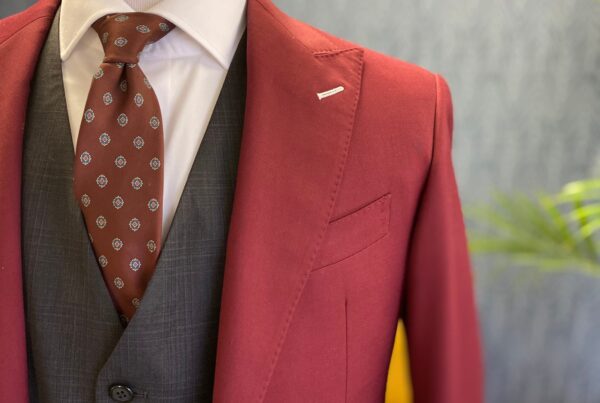
A custom blazer pairs with tailored pants, chinos, dress shirts, knit shirts, loafers, or dress shoes, giving you flexibility while keeping a professional silhouette. Navy, charcoal, medium gray, brown, olive, and textured neutrals all work well. The right choice depends on your workplace, your personality, and how often you plan to wear the piece. If you are weighing custom against off-the-rack, the fit difference shows up fastest in a blazer, since there is no jacket over it to hide a bad shoulder line.
The advantage of going custom is that you choose the lapel style, buttons, lining, pockets, fabric texture, and overall fit. Small details like these make the blazer feel personal without becoming distracting.
Custom Shirts That Actually Fit
A shirt is one of the most visible parts of a business casual outfit, and when it fits poorly, the whole look suffers. A shirt that pulls at the buttons, bunches under a blazer, or feels tight at the neck undercuts even a strong outfit.
Custom shirts fix this with a cleaner fit through the shoulders, chest, sleeves, and waist, plus your choice of collar style, cuff style, fabric, and detailing. You are not limited to plain white either. Light blue, soft gray, subtle stripes, small checks, and textured cotton all work for business casual while adding some personality.
Build shirts that pull double duty: under a blazer, with tailored pants, or on their own when the setting is more relaxed. For a closer look at why fit matters more than fabric in a shirt, we cover it in detail separately.
Tailored Pants: The Detail Most Men Skip
Pants get overlooked, but they carry a lot of the outfit. Poorly fitted pants can make even a well-made shirt and blazer look sloppy.
Custom pants create a cleaner line from waist to shoe, with the right rise, seat, thigh room, taper, and hem length. That precision matters more in business casual than in a suit, since separates do not have a jacket to smooth over an off fit. A clean hem with little to no break reads modern; a slight break reads classic. Either works, as long as it is intentional rather than accidental.
A strong rotation usually includes tailored wool trousers, refined chinos, and one or two seasonal textured pairs. Pants are also the piece most men underspend on relative to the rest of the outfit, which is why custom trousers matter more than most expect.
Shoes Finish the Look
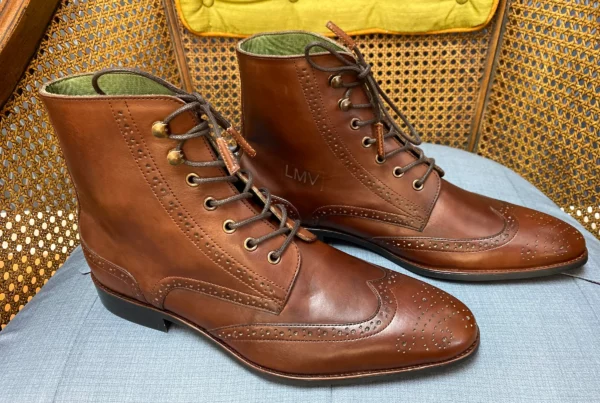
A polished loafer, dress shoe, or refined leather shoe can make an outfit feel professional without requiring a full suit. Brown, oxblood, black, and deep tan all work depending on the rest of the combination, but the shoes need to look intentional and well cared for. Even a simple outfit feels elevated when the shoes are clean and properly matched.
Building Multiple Outfits From a Few Pieces
The advantage of business casual is combinations. A navy blazer pairs with gray trousers, tan chinos, or patterned pants. A white shirt works under nearly every jacket. A textured shirt adds interest worn without a tie. A pair of tailored pants moves between office wear and evening events.
A handful of well-built custom pieces goes further than a closet full of standard sizes, because each piece is built to work with the others from the start.
How Business Casual Shifts by Setting
The core pieces stay the same. What changes is how much restraint or expression the setting allows. We go deeper on this in how to style a custom blazer across casual and formal occasions, but here is the short version:
- Client meetings: lean toward the safer end. A custom blazer, crisp shirt, tailored pants, and polished shoes read as prepared and detail-oriented without feeling overdressed.
- Creative workplaces: more room for texture, pattern, and a relaxed trouser cut. One standout detail usually reads better than an outfit trying to do too much.
- Travel and long workdays: prioritize comfort in the build. Softer construction, breathable fabric, and a fit that allows for a full day of sitting and moving keep you polished without feeling restricted.
How to Start Building a Custom Business Casual Wardrobe
Start with versatile pieces you will actually wear often: a custom blazer, two or three shirts, tailored pants, and one solid pair of shoes. From there, add texture, seasonal fabrics, and color. The goal is not more clothing. The goal is fewer, better pieces that work together.
A thoughtful starting wardrobe:
- A navy or charcoal custom blazer
- White and light blue custom shirts
- One subtle patterned shirt
- Gray or navy tailored pants
- A refined pair of brown or black shoes
- A seasonal sport coat or textured blazer
With these pieces, you can build multiple combinations that feel professional, comfortable, and personal.
The Difference Is in the Fit
Business casual only works when the details are right. A blazer that fits poorly reads too casual. Pants that run long make the outfit feel careless. A shirt with excess fabric ruins the shape of the whole look.
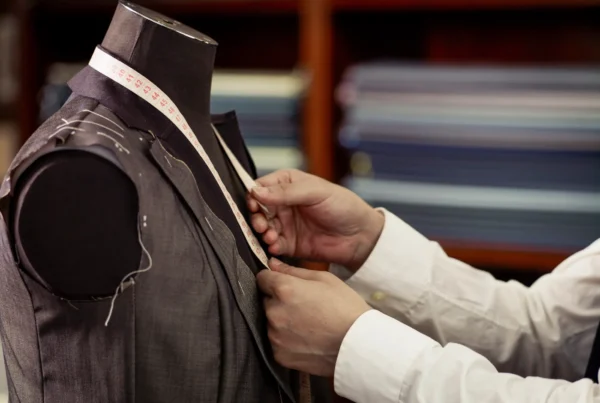
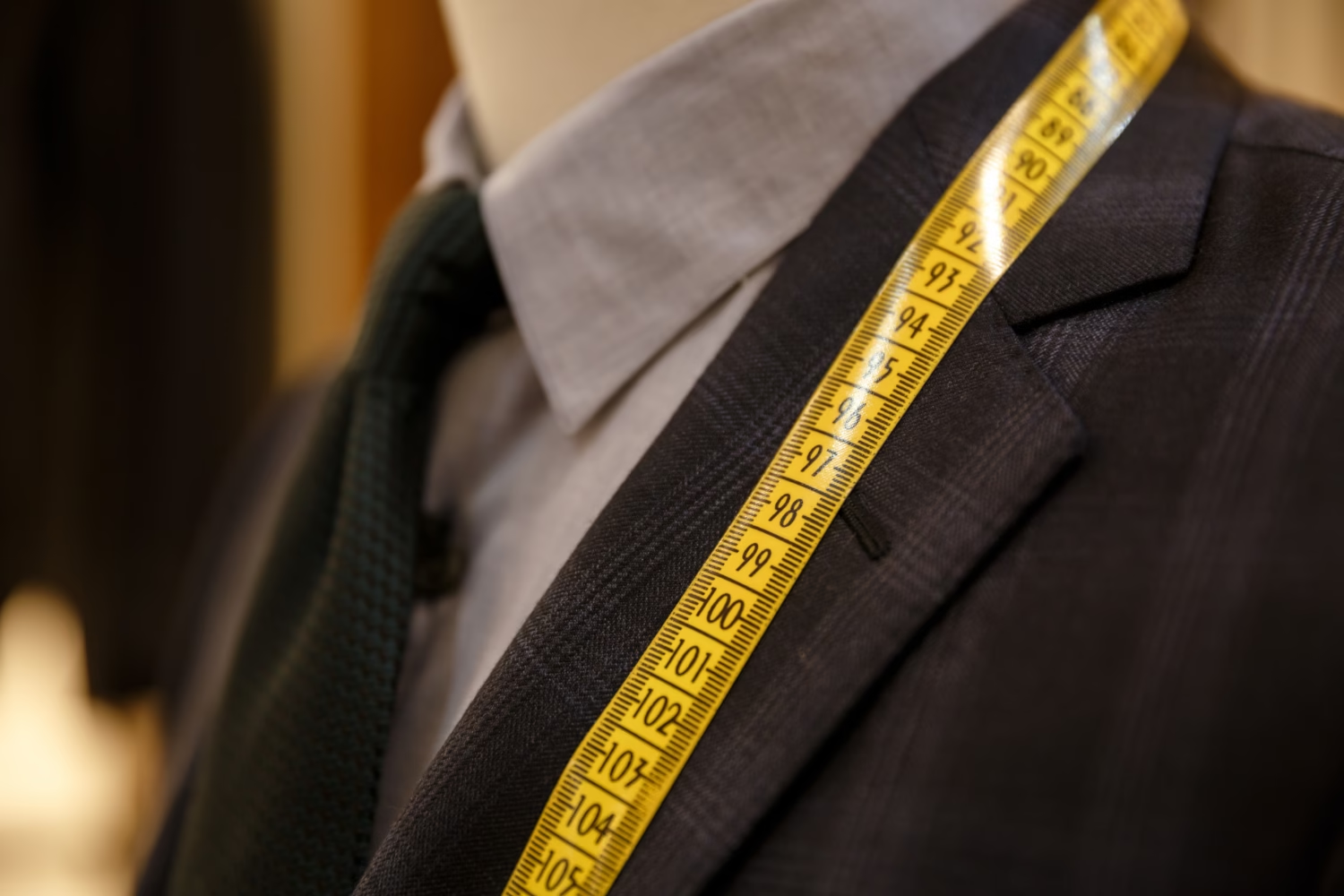
Custom clothing addresses this from the start, built around your measurements, posture, and how the pieces will actually be worn together. That is what separates business casual done well from business casual done by accident: not more clothes, but pieces that fit with purpose.
For professionals ready to refine their everyday wardrobe, The Tailored Foundation offers custom pieces designed to fit your body, match your lifestyle, and elevate the way you show up.
See more from The Tailored Foundation on Google
Add us as a preferred source and our style guides and tailoring advice will show up more often in your Google results.