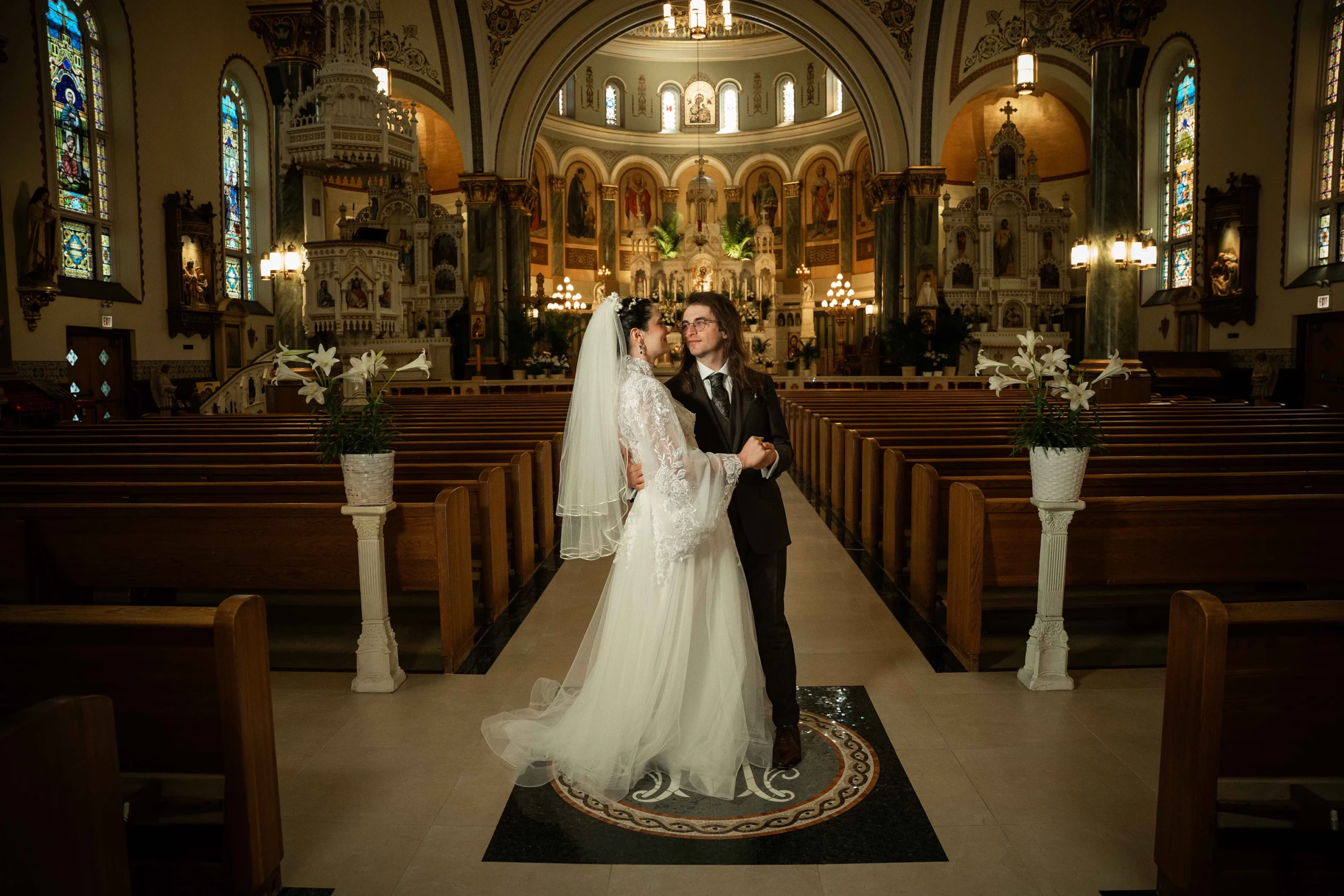
Taven Locke got married a few weeks ago. Church ceremony, the kind of light coming through stained glass that no photographer has to work hard for, and a suit that did exactly what a groom’s suit is supposed to do: it disappeared into the moment instead of pulling attention away from it.
Afterward, Taven left us a review that says more about what custom tailoring actually delivers than most marketing ever could: “Aarish offers exceptional service at every corner. If you need advice on anything from fabrics, accessories, styling, best practices, even shoes, he is more than willing to provide such. I cannot recommend the tailored foundation enough for any of your needs be it just a new shirt or a full suit.”
That line, “advice on anything from fabrics, accessories, styling,” is the part worth sitting with. Because most grooms don’t walk into a tailor shop knowing what they need. They know they need a suit. Everything else, the fabric weight, the color against the venue, the shoes, the tie, gets figured out in the room. That’s the actual job of a custom suit expertise engagement for a wedding: not just building a garment, but building the whole day’s look with someone who has done this before.

Why Wedding Suits Are Different From Everyday Suits
A business suit has to work five days a week in an office. A wedding suit has one job: to look right in photographs that get looked at for the rest of everyone’s lives.
That changes the calculus. Fabric choice matters more, because a wedding suit photographs in every kind of light, church interiors, outdoor receptions, evening reception lighting, and a fabric with the wrong sheen or the wrong drape reads differently in each one. Fit matters more, because a groom stands still and gets photographed from every angle for hours in a way that almost never happens in daily life.
And there’s a timeline pressure that ordinary suiting doesn’t have. A wedding date doesn’t move. If the suit isn’t ready, isn’t right, or doesn’t fit, there’s no pushing the event back a week to fix it.
This is where working with someone who thinks through fabric, styling, and fit together, rather than treating them as separate decisions, actually matters.
What the Photos Show
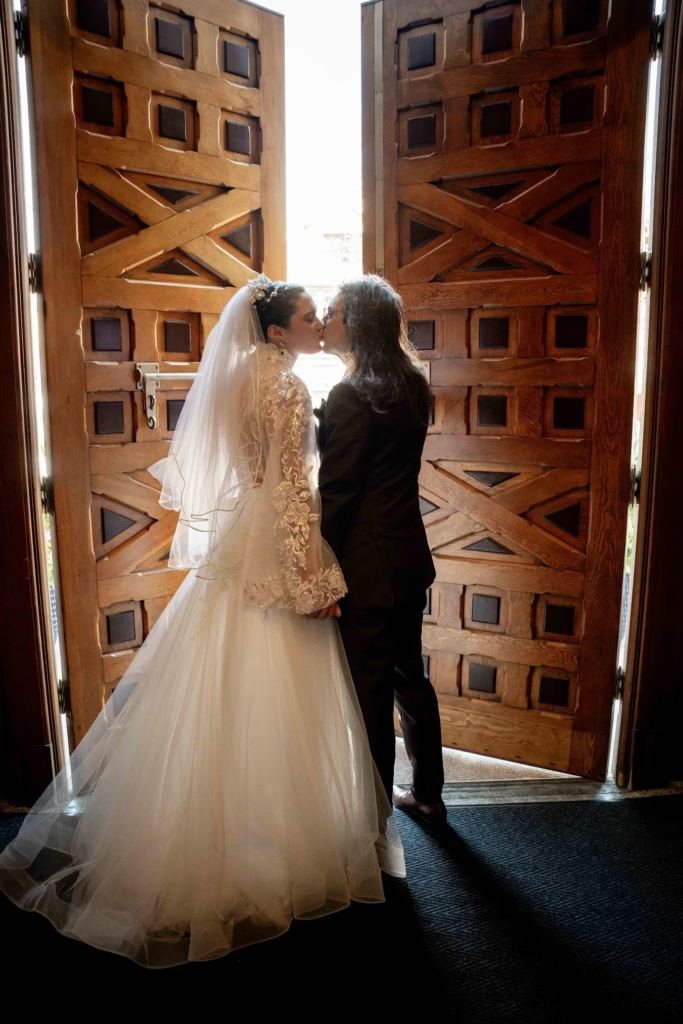
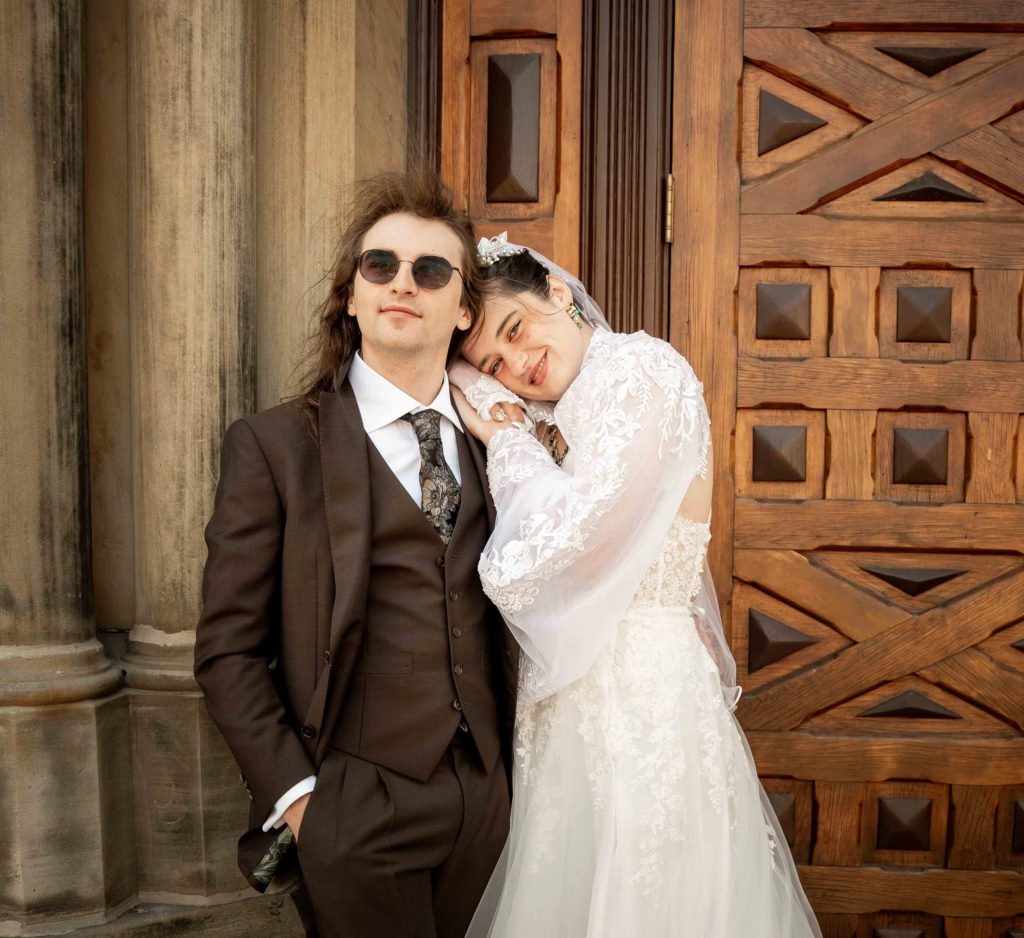
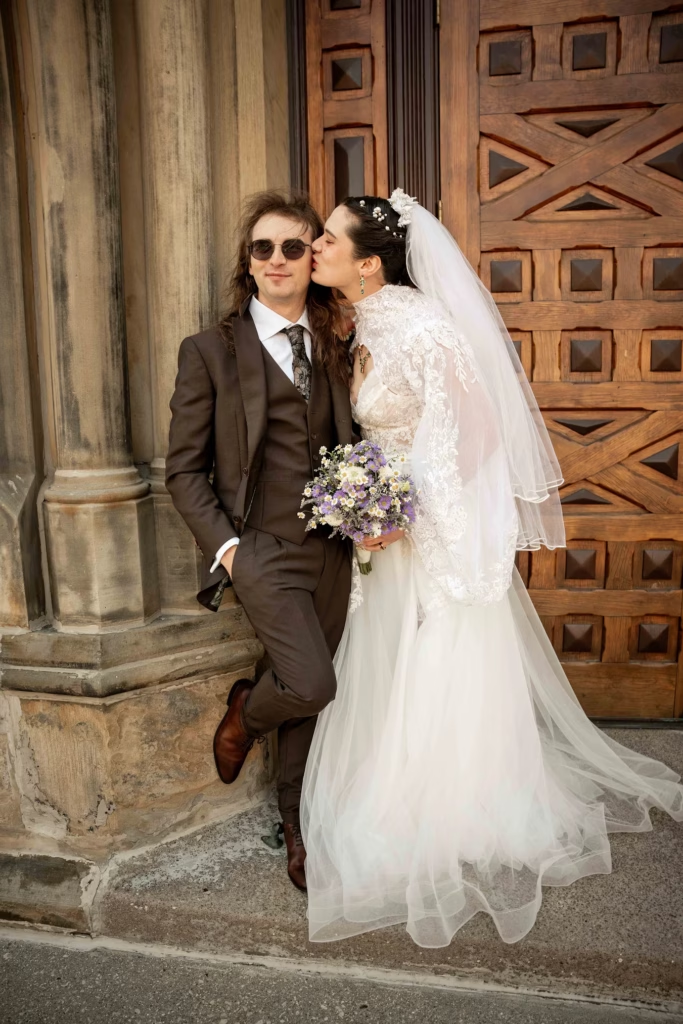
Look at the ceremony shot: groom and bride walking up the aisle together, the suit dark brown against the church’s warm stone and gold. That color choice wasn’t an accident. Brown reads warmer and softer than black in photographs, especially against the kind of ornate, gold-toned interior in these photos. Black can go a little flat and severe in that setting. Brown holds texture and depth.
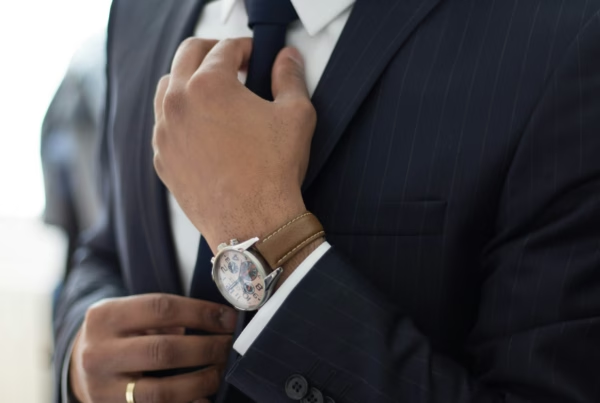
Then there’s the shoulder line. In the portrait shot, arm around his new wife, you can see the jacket sitting clean across the shoulders with no pulling, no bunching at the underarm, no collar gap at the back of the neck. That’s not luck. That’s a shoulder seam built to his actual shoulder point, the kind of fit we walked through in our guide to suit fit.
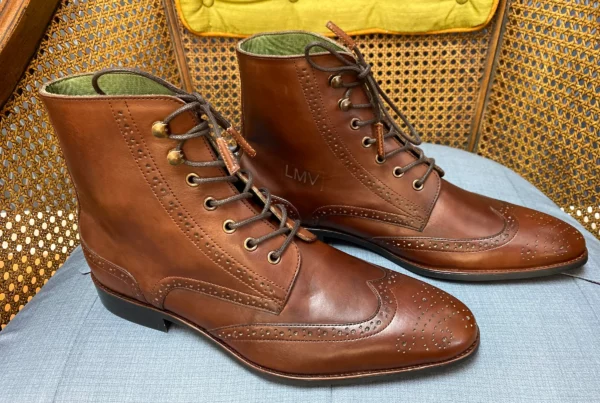
And the shoes. In the shot of him climbing over the stone ledge (every wedding has one of these moments, the groom doing something slightly ridiculous for the photo), you can see leather shoes that are clearly broken in and comfortable enough to move in without a second thought. That’s what custom shoes get you on a day that involves a lot more standing, walking, and climbing over things than anyone plans for.
The Advice That Doesn’t Show Up in Photos
Taven’s review specifically calls out advice on fabrics, accessories, styling, and shoes. None of that shows up as a single visible line item in a wedding photo. It shows up as the absence of problems.
It’s the tie that doesn’t compete with the venue’s color palette. The pocket square that complements without matching too closely. The shirt collar that sits correctly under the jacket lapel instead of gapping or bunching. The fabric that doesn’t wrinkle after twenty minutes of hugging relatives.
This is the value of working with someone who has outfitted a lot of grooms and been to a lot of these ceremonies, even if only through photos afterward. They know which fabrics hold a crease through an eight-hour day. They know which shoe styles work standing on grass and stone alike. They know how a jacket should hang whether the groom is standing still for vows or being spun around for a first-dance photo.
A hand-crafted shirt built into the whole outfit, rather than picked up separately at the last minute, is part of that same thinking. The collar, the cuff, the way it sits under the jacket, all of it gets coordinated instead of left to chance.
Planning Your Own Wedding Suit
If you’re a groom starting this process, here’s what we’d tell you, the same advice Taven got.
Start early. Four to six weeks minimum for construction and fitting, and that’s before you factor in a final fitting close to the date to account for any last-minute weight changes or schedule shifts. Weddings booked during peak season, spring and fall, fill our calendar fast, so starting the conversation months out gives you room.
Think about your venue before you think about color. A church with gold and stone reads differently than an outdoor barn wedding or a modern hotel ballroom. The fabric and color that photograph well in one setting can fall flat in another. This is a conversation worth having early, not a decision to make alone from a swatch book.
Don’t treat shoes as an afterthought. You’ll be standing, walking, and moving more than any other day of the year. Comfortable, well-fitted shoes matter as much as the jacket.
Bring your partner’s palette into the conversation. Most brides have a color story already worked out for the wedding, flowers, bridesmaids’ dresses, the overall tone. A groom’s suit works best when it’s coordinated with that, not chosen in isolation.
What This Looked Like for Taven
Based on the review and the photos, this played out about as well as it can. A suit that fit cleanly through the shoulders and body. A color that worked with the venue instead of against it. Shoes that held up through a full day of standing, walking, and the occasional stone ledge. And, per the review, advice available at every step for someone who probably wasn’t sure what questions to ask going in.
That’s the actual product. Not just a suit. A groom who didn’t have to think about his suit on the one day he had a hundred other things to think about.
Getting Started
If you’re planning a wedding and need a suit that does its job without becoming one more thing to manage, we’d like to help. We work with grooms across Milwaukee, Libertyville, and the Chicago area, and the process starts with a conversation about your venue, your date, and what you and your partner are picturing.
Reach out to schedule a consultation and let’s build a suit that holds up under a full day of photographs and still feels like you at the end of it.
FAQ
How far in advance should I order a wedding suit?
Book four to six weeks before the date at minimum, and earlier during spring and fall wedding season when calendars fill up fast. A final fitting close to the date is standard to account for any last-minute changes.
Should the groom’s suit match the groomsmen?
Not necessarily. Many grooms wear a slightly different cut, fabric, or color to stand apart in photos while still coordinating with the overall wedding palette. This is worth discussing during your fitting.
What fabric works best for a wedding suit?
It depends heavily on your venue and season. Warmer tones like brown or navy often photograph better in venues with gold or stone interiors, while lighter wools suit outdoor spring and summer weddings. We walk through this during consultation.
Do I need custom shoes for my wedding?
Not required, but strongly recommended. You’ll be standing and walking far more than a typical day, and custom shoes built for your feet hold up better than anything broken in the week before.
Can you coordinate with my partner’s wedding colors?
Yes. We regularly work directly with the overall wedding palette, florals, bridesmaids’ colors, venue tones, to make sure the groom’s suit complements rather than clashes with the day’s overall look.
See more from The Tailored Foundation on Google
Add us as a preferred source and our style guides and tailoring advice will show up more often in your Google results.